Hibachi and teppanyaki
In traditional Japanese usage, a hibachi is a charcoal brazier used for warmth. The word has taken on a different meaning in some American restaurant settings.
American Japanese steakhouses may call chef-at-the-table flat-grill cooking “hibachi.” The cooking method is more precisely described as teppanyaki: cooking on a flat iron plate. Benihana, for example, uses these terms in describing its own format.
The practical point is simple: the word alone does not establish how a particular restaurant is equipped or how it serves a meal.
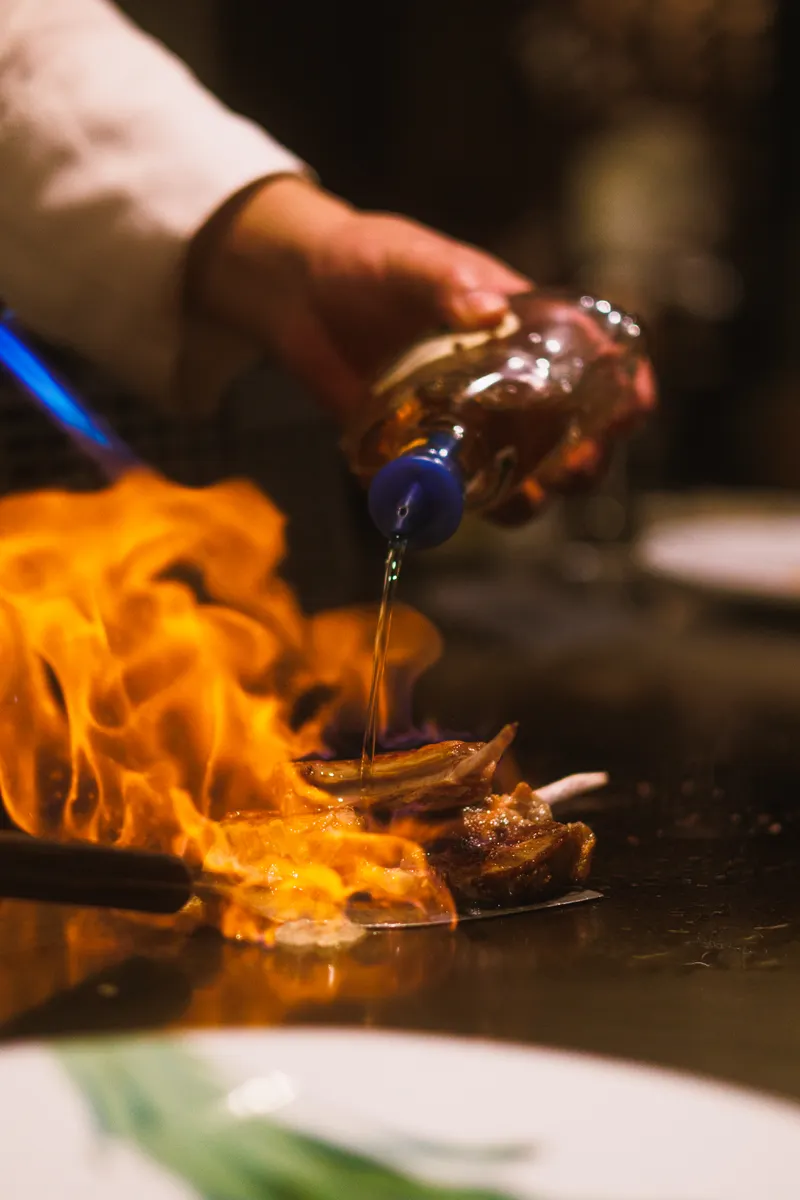
The format is worth asking about
Before choosing a table, ask whether food is prepared where guests sit or in a separate kitchen. If there is grill-side seating, find out whether the table is shared and how seating times are arranged.
Do not assume that a performance, a particular sequence of courses, or a dedicated chef is included. A restaurant can explain what it currently offers and what to expect during the service you are considering.
For a group, make sure everyone understands the arrangement. A quiet conversation, a close view of the cooking, and space for a large party may call for different seating choices.
Questions for the restaurant
- Where will we sit? Ask whether grill-side and standard tables are separate options.
- Will we share the table? Confirm the arrangement for a party of your size.
- How does ordering work? Check whether diners choose individually and how accompanying dishes are served.
- What is cooked together? Discuss shared surfaces and utensils with staff if they affect your dietary needs.
- What should we expect nearby? Ask about heat, sound, smoke, or flames if these affect someone’s comfort.
Plan around your group
Tell the venue about the number of guests, any mobility requirements, and the kind of seating you need. Ask about suitable space for a wheelchair, a high chair, or a stroller if relevant.
Confirm the date, service time, arrival expectations, and any booking terms directly. This publication cannot verify a venue’s current operating status or make reservations.
Use the dining guide to prepare the rest of your questions, and the menu guide to make sense of unfamiliar dish names.